Early Support, Better Outcomes: Welfare Together Director Tracey Stone appears on Credit & Collections Risk Podcast
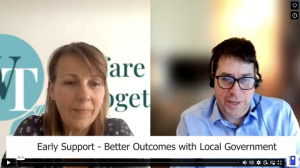
Welfare Together Director Tracey Stone is the latest guest on the RO-AR Collections & Credit Risk Podcast, hosted by Chris Warburton.
The episode explores why households are falling into arrears, how council tax and utility debts differ from consumer credit, and why middle-income customers are increasingly affected by cost-of-living pressures.
The discussion highlights the need for earlier engagement, income maximisation, benefit checks, single-customer views, better financial education and a more preventative approach to collections. It also considers the role of AI in identifying customers who need support, while emphasising that human judgement and empathetic conversations remain central to effective customer outcomes.
Click here to watch the full conversation.
Key Take Aways
- Middle-income households are increasingly presenting with arrears, often without prior experience of debt or support services.
- Customers often prioritise consumer credit over council tax or utility bills because credit facilities have more immediate day-to-day utility.
- Early engagement is critical; the first missed payment is identified as the optimal point to ask what has changed and what support is needed.
- Many people are unaware of the benefits, discounts, exemptions or disability premiums to which they may be entitled.
- The cost-of-living crisis is described as ongoing, with further pressure expected from energy, food, fuel and employer cost increases.
- Local authorities can improve outcomes by moving from departmental debt collection to a single-customer view.
- Public sector collections should distinguish more clearly between those who cannot pay and those who will not pay.
- Enforcement should be reserved for those who refuse to pay, not those who lack means or need income maximisation support.
- Outsourced welfare engagement can provide capacity beyond one internal staff member and may improve return on investment.
- Preventative engagement can reduce downstream pressure on health, mental health, social care and children’s services.
- AI may help identify missed cases and process customer categories faster, but human judgement remains essential.
- The core service model is customer-centred: ask “How are you?” and “What can we do to help?” before demanding payment.
Innovation
- A “whole person” approach to public sector debt, linking council tax, parking, housing benefit overpayments and other liabilities into a single customer view.
- Early intervention at the first missed payment, before reminders, summonses or enforcement action escalate costs and customer stress.
- Use of third-party engagement to break non-engagement cycles where the customer no longer trusts or responds to the local authority or utility.
- Income maximisation as a collections tool, including benefit checks, exemptions, discounts and backdated entitlements.
- Reframing collections as preventative support, with potential benefits across health, mental health, social care and family services.
- Potential use of AI to identify missed customers, categorise support needs and accelerate early-stage triage.
- Financial education programmes in schools, colleges and universities to build understanding of bills, budgeting and consequences of non-payment.
- Customer-centred call scripting that opens with wellbeing and support questions rather than payment demands.
Key Discussion Points
- The growing pressure on middle-income households that have not previously needed debt support.
- The behavioural reality that customers prioritise credit cards and overdrafts when they rely on them for monthly living costs.
- The importance of understanding why a customer has missed a payment, rather than assuming unwillingness to pay.
- The need to intervene before summonses, fees or enforcement action are triggered.
- The limitations of digital-only support routes for customers who lack confidence, access or willingness to share information online.
- The role of schools and youth education in improving financial literacy and bill awareness.
- The operational challenge created by local authority departmental silos.
- The GDPR and data-sharing barriers that restrict single-customer debt management.
- The opportunity to improve collections outcomes through a single view of customer debt and circumstances.
- The financial and operational case for outsourcing early welfare engagement.
- The need to balance AI-enabled identification with human empathy and judgement.
- The wider social case for preventative debt support, including reduced stress and improved mental health.