Welfare Together commissioned for new Rugby Council project following success cost-of-living of pilot

Welfare Together has been invited by Rugby Borough Council to deliver a new cost‑of‑living support project in the Admirals ward, following the strong results and resident impact achieved through the recent Hillmorton ward pilot.

The Hillmorton project, delivered between August and December 2025, reviewed 2,431 households across 116 postcodes and set a new benchmark for proactive, data‑led vulnerability support. Welfare Together was contacted by 487 households, completing 101 full benefit entitlement checks, supporting 49 households with council tax reduction or related savings, and guiding 101 households through social tariff options. Six households in immediate hardship received direct financial assistance.

The pilot generated £159,236.50 in attributable financial gains for residents (a return of £15.92 for every £1 invested) alongside wider system benefits including arrears prevention and reduced demand on crisis services. Resident feedback praised the organisation’s compassionate, person‑centred approach, with many describing the support as life‑changing.

After the project was shortlisted for an IRRV Excellence Award, Rugby Borough Council asked Welfare Together to replicate this model in the Admirals ward, expanding the partnership and ensuring more households benefit from early intervention, entitlement checks, and practical cost‑of‑living support.

The new project will apply the same intelligence‑driven methodology, ethical engagement standards, and rigorous auditability that defined the Hillmorton pilot, while tailoring delivery to the needs and demographics of the Admirals community.

This commission reflects both the measurable impact of the initial pilot and Rugby Borough Council’s confidence in Welfare Together’s ability to deliver high‑quality, preventative support at scale. It marks the next step in a growing partnership focused on reducing financial vulnerability, improving resident outcomes, and strengthening long‑term collection sustainability across the borough.

Richard Moore, Revenues & Benefits Manager, Finance and Performance, Rugby Borough Council, said: 

“We are proud of the positive impact the pilot project had on our residents lives. This case shows what can be achieved when we work closely with partners, look beyond the debt, and support residents with the wider pressures they are facing.”

Read the case study from the pilot project.

Local Authority Civil Enforcement Forum (LACEF) Conference 2026 Reflections

By Tracey Stone, LACEF Board Member and Welfare Together Director

The LACEF Conference 2026 at The Belfry in Birmingham brought together one of the strongest line‑ups we’ve ever hosted, and I’m incredibly proud to have helped shape a day that truly reflected the challenges, conversations and collaboration happening across our sector.

From the moment delegates arrived, the energy was unmistakable: local authority leaders, enforcement professionals and policy specialists all ready to tackle the issues shaping revenues, collections and customer support in 2026.

Key Themes & Discussions

  • The evolving landscape of debt and recovery: Forum highlights shared in the run‑up to the conference set the tone for the day, from recovery processes and unsummoned arrangements to complex council tax premium cases and business rates restructuring. These conversations continued in the room, with delegates exploring how changing systems, retailer restructuring and new liability scenarios are impacting day‑to‑day decision‑making.
  • Enforcement under pressure: Our Enforcement Panel, featuring Gary Carr (Empira), Lee Taylor, Laura Anne Smith (Excel Civil Enforcement), Lisa Black (Erewash Borough Council) and Ben Hamilton (Manchester City Council), delivered one of the most talked‑about sessions. Fee increases, sustainability pressures, rising violence towards enforcement agents, and the need for honest dialogue about future models were front and centre. The message was clear: collaboration is no longer optional.
  • Relief schemes, liability challenges & rating complexities: Delegates dug into real‑world cases around retail relief eligibility, sole or main residence decisions, garages serving trade customers, and transitional relief supplements. These are the kinds of nuanced scenarios that LACEF members debate daily and bringing them into the conference space helped surface shared solutions and best practice.
  • Cross‑sector leadership and future direction: Our heavyweight panel of sector leaders Allan Clark (Barnet Council), Amy Collins (Rundle & Co), Tom Clark (Liverpool City Council), Charlotte Crane (Southwark Council), and Katie Kelly (Huntingdonshire District Council), explored the future of local government debt, leadership expectations, and the importance of consistency and transparency across organisations.
  • Emerging issues shaping 2026 and beyond: Across the day, delegates also engaged with topics such as:
    • AI adoption in local government
    • Violence in the workplace research
    • Next‑of‑kin tracing challenges
    • Housing payment policy changes
    • Shared liability and complex occupancy cases

A milestone year for LACEF

This year also marked a major achievement: the LACEF Forum surpassing 1,000 members, a testament to the appetite for shared learning, peer support and open discussion across the sector.

Looking ahead

The conversations at The Belfry reinforced why LACEF continues to be such an important space for local authorities: practical, honest, collaborative and rooted in real‑world challenges. Welfare Together is proud to support that mission, and I’m grateful to everyone who contributed to making the 2026 conference one of our most impactful yet.

Thank you to all delegates, speakers, panel members and partners and to the LACEF Board for their continued leadership.

Welfare Together’s vulnerable customer intervention work recognised in multiple industry award shortlistings

Welfare Together has been shortlisted for multiple awards, marking a standout year of recognition for its impact, innovation and sector‑leading partnership work.

The organisation has been named a finalist in two categories at the IRRV Performance Awards 2026:

  • Excellence in Social Inclusion, alongside Mid Sussex District Council, recognising the partnership’s success in identifying and supporting vulnerable residents, securing vital financial relief, and improving long‑term outcomes for households in hardship. Read the full case study here.
  • Excellence in Partnership Working, with Rugby Borough Council, celebrating a collaborative model that has delivered early‑intervention support, increased engagement from residents in arrears, and significant returns for both the council and its communities. Read the full case study here.

The Institute of Revenues, Rating and Valuation (IRRV) is the primary UK-based professional body and examining board for practitioners working in local taxation (like Council Tax and Business Rates), welfare benefits administration, and property valuation. A key element of the IRRV Awards is the inspection process, which will take place in the coming months and be the basis for deciding the winners.

Welfare Together was also recently named as a Finalist in the Credit Connect Credit & Collections Industry Awards 2026 in two categories:

  • Customer Vulnerability & Support Initiative of the Year
  • Innovator of the Year

Adding to the momentum, Welfare Together’s Founding Director Tracey Stone has been named in the Credit Connect Industry Leaders List 2026, recognising her as one of the UK’s most influential figures shaping the future of responsible collections, vulnerability support and ethical practice.

Tracey Stone said the recognition reflects the organisation’s mission and the dedication of its partners:

“This industry recognition is a testament to the organisations we work with who share our commitment to doing things differently. Social inclusion and partnership working are at the heart of what we do, and we’re proud to see that approach given the credit it deserves.”

With growing demand for early‑intervention support and a rapidly expanding client base, Welfare Together’s continued recognition highlights its role as a leading force in improving outcomes for vulnerable people and strengthening the social impact of public‑sector and creditor services.

Find out more about working with us.

Welfare Together Secures Erewash Borough Council as Latest Local Authority Partner

Welfare Together has strengthened its national footprint with the addition of Erewash Borough Council as its newest client, marking another milestone in a period of sustained growth for the early‑engagement specialist.

The partnership will see Welfare Together deliver its human‑centred, vulnerability‑aware support model to residents across Erewash, helping people in arrears access the right help earlier, maximise income and avoid crisis.

Mid Sussex District Council and Walsall Council recently renewed their partnership with Welfare Together for a third year and Reventus committed to a fourth year, reflecting the proven impact of its model.

This growth comes as amid the government’s overhaul of council tax administration, which puts the onus on local authorities to engage earlier and offer more tailored, fairer support to vulnerable households.

Lisa Black, Head of Revenues and Benefits at Erewash Borough Council, said:

“We’re committed to supporting residents in a way that is fair, compassionate and effective. Welfare Together’s approach aligns perfectly with our values, and we’re confident this partnership will help more people get the support they need at the earliest opportunity.”

Tracey Stone, Director of Welfare Together, said:

“We’re delighted to welcome Erewash Borough Council on board. Our growing number of renewals and new partnerships shows that councils and enforcement partners want a more empathetic, evidence‑based way of supporting vulnerable residents. Our team is passionate about delivering real‑world outcomes for individuals, for communities and for the organisations we work alongside.”

Founded in 2022 by Tracey Stone who has 25 years’ experience in local authority debt recovery, Welfare together partners with Councils, Housing Associations, Enforcement Firms and other creditors to provide proactive, tailored early intervention support for those who can’t pay. Its Welfare Officers personally engage with vulnerable individuals to help them navigate complex and overwhelming systems and find proportionate, fair and sustainable debt resolution outcomes, based on their specific circumstances. This includes financial guidance and relief, income maximisation, mental health support and crisis intervention.

By understanding their unique circumstances and providing holistic guidance, Welfare Together has helped individuals save almost £1 million through access to benefits, exemptions, discounts and financial relief.

Find out more about working with us.

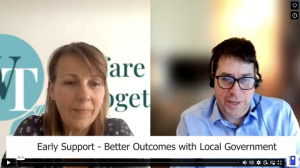
Early Support, Better Outcomes: Welfare Together Director Tracey Stone appears on Credit & Collections Risk Podcast

Welfare Together Director Tracey Stone is the latest guest on the RO-AR Collections & Credit Risk Podcast, hosted by Chris Warburton.

The episode explores why households are falling into arrears, how council tax and utility debts differ from consumer credit, and why middle-income customers are increasingly affected by cost-of-living pressures.

The discussion highlights the need for earlier engagement, income maximisation, benefit checks, single-customer views, better financial education and a more preventative approach to collections. It also considers the role of AI in identifying customers who need support, while emphasising that human judgement and empathetic conversations remain central to effective customer outcomes.

Click here to watch the full conversation.

Key Take Aways

  • Middle-income households are increasingly presenting with arrears, often without prior experience of debt or support services.
  • Customers often prioritise consumer credit over council tax or utility bills because credit facilities have more immediate day-to-day utility.
  • Early engagement is critical; the first missed payment is identified as the optimal point to ask what has changed and what support is needed.
  • Many people are unaware of the benefits, discounts, exemptions or disability premiums to which they may be entitled.
  • The cost-of-living crisis is described as ongoing, with further pressure expected from energy, food, fuel and employer cost increases.
  • Local authorities can improve outcomes by moving from departmental debt collection to a single-customer view.
  • Public sector collections should distinguish more clearly between those who cannot pay and those who will not pay.
  • Enforcement should be reserved for those who refuse to pay, not those who lack means or need income maximisation support.
  • Outsourced welfare engagement can provide capacity beyond one internal staff member and may improve return on investment.
  • Preventative engagement can reduce downstream pressure on health, mental health, social care and children’s services.
  • AI may help identify missed cases and process customer categories faster, but human judgement remains essential.
  • The core service model is customer-centred: ask “How are you?” and “What can we do to help?” before demanding payment.

Innovation

  • A “whole person” approach to public sector debt, linking council tax, parking, housing benefit overpayments and other liabilities into a single customer view.
  • Early intervention at the first missed payment, before reminders, summonses or enforcement action escalate costs and customer stress.
  • Use of third-party engagement to break non-engagement cycles where the customer no longer trusts or responds to the local authority or utility.
  • Income maximisation as a collections tool, including benefit checks, exemptions, discounts and backdated entitlements.
  • Reframing collections as preventative support, with potential benefits across health, mental health, social care and family services.
  • Potential use of AI to identify missed customers, categorise support needs and accelerate early-stage triage.
  • Financial education programmes in schools, colleges and universities to build understanding of bills, budgeting and consequences of non-payment.
  • Customer-centred call scripting that opens with wellbeing and support questions rather than payment demands.

Key Discussion Points

  • The growing pressure on middle-income households that have not previously needed debt support.
  • The behavioural reality that customers prioritise credit cards and overdrafts when they rely on them for monthly living costs.
  • The importance of understanding why a customer has missed a payment, rather than assuming unwillingness to pay.
  • The need to intervene before summonses, fees or enforcement action are triggered.
  • The limitations of digital-only support routes for customers who lack confidence, access or willingness to share information online.
  • The role of schools and youth education in improving financial literacy and bill awareness.
  • The operational challenge created by local authority departmental silos.
  • The GDPR and data-sharing barriers that restrict single-customer debt management.
  • The opportunity to improve collections outcomes through a single view of customer debt and circumstances.
  • The financial and operational case for outsourcing early welfare engagement.
  • The need to balance AI-enabled identification with human empathy and judgement.
  • The wider social case for preventative debt support, including reduced stress and improved mental health.

Welfare Together team completes Zero Suicide Alliance Awareness Training

The Welfare Together team is proud to have completed the Zero Suicide Alliance‘s Awareness Training to make having these difficult conversations with the vulnerable customers they deal with a little easier.

The Zero Suicide Alliance (ZSA) is a UK based suicide awareness and prevention initiative hosted by Mersey Care NHS Foundation Trust and charitably funded via Mersey Cares NHS Charity. It’s Suicide Awareness Training is a short, free, online course that can be taken by anyone who wants to learn basic suicide awareness and prevention skills.